How Long Is Soon? Meaning, Timeframes, and Real-Life Examples
Have you ever found yourself wondering, “How long is soon?” You’re not alone. The term “soon” is notoriously vague, offering no fixed timeframe and varying widely based on context.
Understanding the meaning of soon is essential, as it influences expectations in both personal and professional communication, whether you’re waiting for a friend to arrive or a project to be completed.
Lets explore common interpretations of soon, providing real-life examples to clarify how this seemingly simple word can lead to misunderstandings.
Quick Answer
“Soon” does not have a fixed timeframe because its meaning depends heavily on context. In everyday situations, it may mean a few minutes or hours, while in business or project planning, it could mean days, weeks, or even months. The intended timeframe depends on the specific situation, which is why understanding the meaning of “soon” can help set clearer expectations and improve communication.
What Does “Soon” Mean?
The term “soon” is a relative time expression that generally means a short time from now or before long. However, it does not have a precise duration.
In everyday English, when someone says, “I’ll call you soon,” they usually mean they will call in the near future, perhaps within minutes or hours. The exact timeframe depends on the situation and the speaker’s intended meaning.
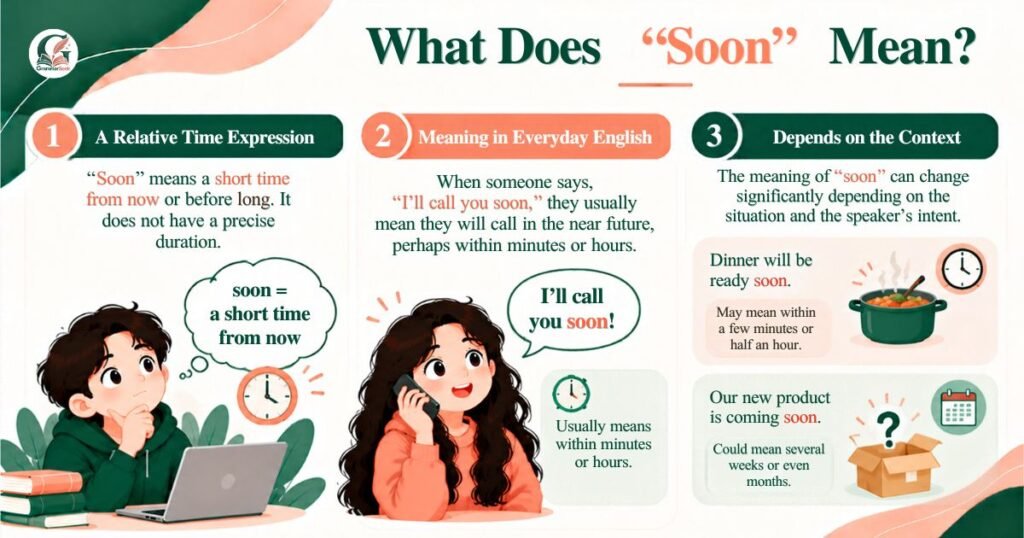
The meaning of “soon” can change significantly depending on context.
For example:
- If someone says, “Dinner will be ready soon,” it may mean the meal will be ready within a few minutes or half an hour.
- When a company announces that a new product is coming “soon,” the timeframe could extend to several weeks or even months.
Therefore, understanding how long soon means requires considering the context in which the word is used.
Why Soon Does Not Have an Exact Time Limit
The term “soon” stands apart from precise time expressions like “five minutes” or “next week” due to its inherent vagueness. This ambiguity grants it flexibility, allowing individuals to gauge urgency or expectation without getting tied down to a specific timeframe.
Unlike definite durations, “soon” can mean different things to different people, which is what makes it both useful and perplexing in communication.
The contextual nature of “soon” plays a crucial role in determining its meaning.
For example,
- when waiting for a meal, “soon” may imply just a few minutes
- while in the world of technology, the release of a software update could take days or even weeks.
In these disparate contexts, the perception of time is influenced by the immediacy of the situation, shaping what “soon” signifies distinctly for each event. That is why soon does not have an exact time limit.
How Long Is Soon Exactly?
The question “how long is soon exactly?” has no single answer. The intended timeframe depends on the situation, the type of event, and the context in which “soon” is used.
The term “soon” has no universal definition because its meaning depends on the context and situation. Depending on what is happening, “soon” can refer to a few minutes, several days, or even a few weeks or months. This is why “the soon timeframe” can vary from one situation to another.
For example:
- If a friend texts you that they’ll be at your place “soon,” you might expect them to arrive within minutes.
- If a tech company announces that a product will be launching “soon,” it could mean a wait of several weeks or even months.
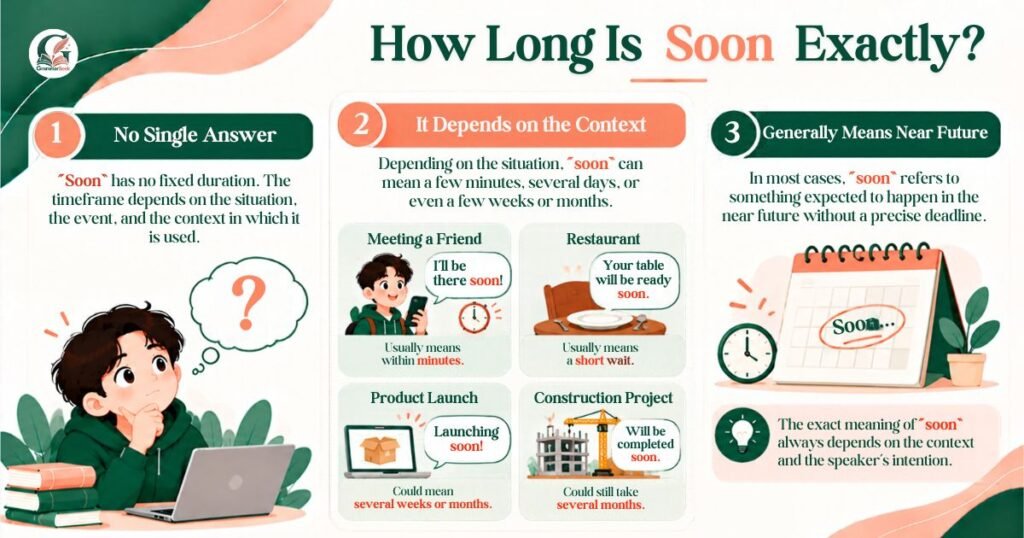
These examples show how “how long is soon” can have different answers depending on the context.
The nature of the activity or event can also help indicate what “soon” means.
- If a restaurant tells diners that their table will be ready “soon,” it likely refers to a short wait.
- A construction project described as being completed “soon” could still take several months.
In most cases, “soon” refers to something expected to happen in the near future without providing a precise deadline.
Typical Timeframes for “Soon” in Different Situations
The meaning of “soon” in conversation changes depending on the context and situation. The table below shows how people commonly interpret the word.
| Situation | Typical Meaning of Soon |
| Text Message | A few minutes to several hours |
| Meeting a Friend | 10–60 minutes |
| Workplace Task | Hours to a few days |
| Customer Support Reply | 1–7 days |
| Package Delivery | Same day to several days |
| Product Launch | Weeks to months |
| Large Business Project | Months or longer |
Soon Meaning in Text Messages
“Soon” in text messages typically suggests a short wait, often within a few minutes or later the same day. For example, a friend may mean they will respond in ten minutes, while a colleague may mean sometime later that day.
Soon Meaning at Work
“Soon at work” can mean anything from a few hours to several days, depending on the task or project. For example, when a manager says they will provide feedback “soon,” the timeframe may depend on their workload and the nature of the task.
Soon Meaning in Relationships
When someone says, “I’ll call you soon” or “Let’s meet soon,” the phrase does not specify an exact time. It may mean later that day, within a few days, or even within a few weeks, depending on the situation and the people involved.
Why Is the Word “Soon” So Vague?
The word “soon” is vague because it has no clear or fixed timeframe. Unlike precise dates, times, or durations, “soon” leaves the exact timing open to interpretation.
One reason for this ambiguity is that people may view the same timeframe differently.
For example:
- a customer waiting for a refund may consider three days a long wait
- while a business may view three days as a quick turnaround.

Personal expectations can also affect how people interpret “soon.” Some people may think of minutes when they hear the word, while others may think of days.
As a relative time expression, “soon” provides flexibility, but this flexibility can also lead to misunderstandings.
The context of soon is therefore important when determining its intended timeframe. Looking at the situation and the event being discussed can provide a clearer idea of what “soon” means.
Why People Use the Word “Soon” Instead of Giving Exact Times
People often use the term “soon” when they lack precise timing or anticipate potential changes. This word serves as a convenient placeholder, allowing individuals to reference a future action without the pressure of committing to a specific deadline.
By using “soon,” it’s easier to maintain flexibility in plans, making it particularly useful in dynamic environments where circumstances can shift rapidly.
For example, consider a manager who informs their team that a report will be ready “soon.” This approach allows them to acknowledge the effort involved without tying themselves to a fixed completion date. Such ambiguity can be beneficial, as it relieves the pressure of immediate deadlines while still indicating progress is expected.
In customer service scenarios, representatives often say that an update will be available “soon” when the timeline isn’t clear. This phrasing keeps customers informed without overpromising, thus helping to manage expectations. It creates a sense of reassurance, implying that the issue is being addressed while allowing room for unforeseen delays.
Using “soon” embodies a practical approach to communication in uncertain situations. It balances transparency and caution, enabling conversations to flow smoothly without the constraints of rigid timelines.
How to Interpret “Soon” Correctly
When navigating the meaning of “soon,” context is key. A small task, like responding to an email, may truly take just a few hours, while a larger project, such as a home renovation, can stretch into days or even weeks. Understanding the type of activity helps shape your expectations surrounding the “soon timeframe”.
Consider the speaker’s history with the term. If they often use “soon” with a relaxed attitude, it might imply a longer wait than you anticipate. In urgent situations, “soon” could indicate immediate action is required.
If you find yourself needing precise timing, it’s wise to ask for clarification. This step can prevent misunderstandings and ensure everyone is on the same page, enhancing communication and efficiency.
Real-Life Examples of “Soon”
The meaning of the term “soon” changes with context. Consider the following real life examples of soon.
- “I’ll be there soon” often implies a timeframe of minutes to perhaps an hour.
- “I’ll get back to you soon” can mean anything from within the day to several days, depending on the urgency of the matter at hand.
- “Coming soon” is typically promotional, suggesting an event or product will arrive in weeks or even months.
- “Talk to you soon” often conveys a promise of communication within a more casual timeframe, perhaps by the end of the week.
- “See you soon” can vary widely; it might mean a quick meetup later that day or an indefinite plan to reconnect months down the line.
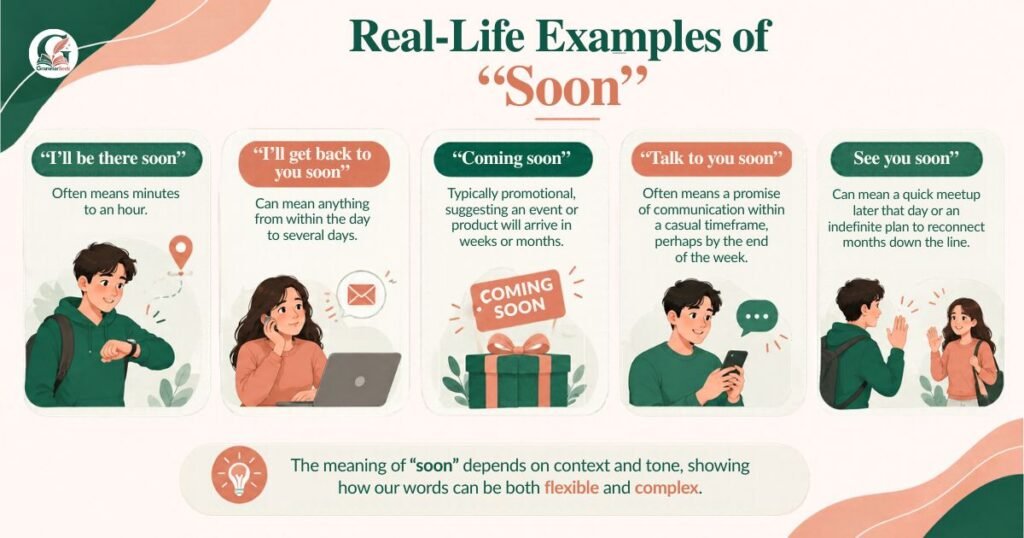
This ambiguity can lead to excitement or frustration, illustrating how tone and situation shape our understanding. The interpretation of “soon” hinges on context and speaker intent, reminding us of the beauty and complexity of human communication.
Does “Soon” Mean Minutes, Hours, Days, or Weeks?
The word “soon” can mean minutes, hours, days, weeks, or even months, depending on the context. It does not have a fixed timeframe, so the situation and type of task usually determine what “soon” means.
When Soon Means Minutes
For food delivery, transportation, or meetings, “soon” often refers to a few minutes. For example, if a colleague says they will join a meeting soon, they may mean within the next few minutes.
When Soon Means Hours
In texts, emails, and routine workplace tasks, “soon” may refer to several hours. For example, “I’ll get back to you soon” could mean that the person will respond later that day.
When Soon Means Days
For customer support, document reviews, and approvals, “soon” may mean within a few days. The task may require additional time before a response or decision can be provided.
When Soon Means Weeks or Months
For larger projects, product launches, hiring processes, or software development, “soon” can refer to several weeks or even months. These activities usually involve multiple steps and therefore have longer timeframes.
Overall, the soon meaning depends on the situation. There is no universal answer to how long is soon, because the timeframe can vary from a few minutes to several months.
Soon vs Other Time Expressions
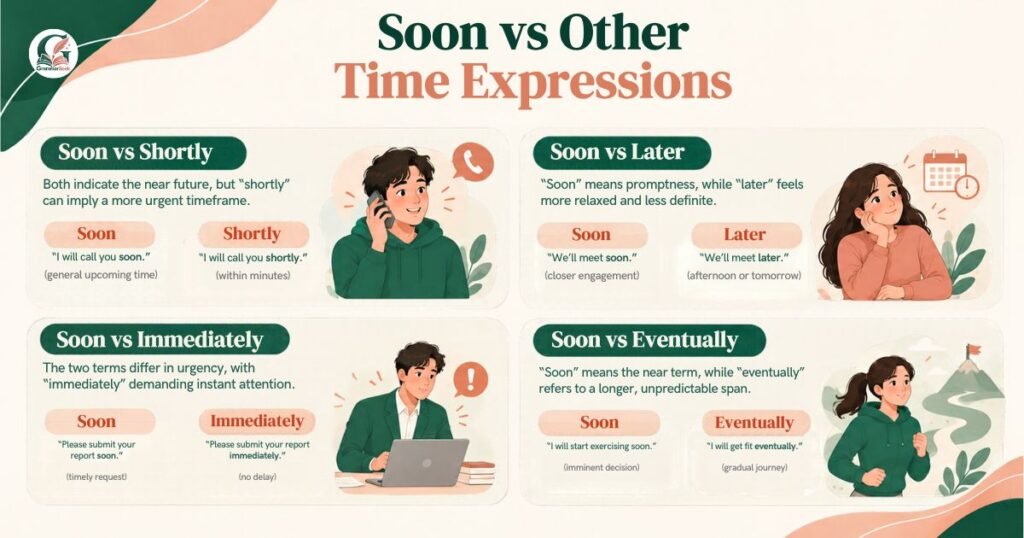
Understanding similar time-related expressions can make the meaning of soon easier to understand. Although these expressions all refer to future time, they differ in how soon an event is expected to happen.
Soon vs Shortly
Both “soon” and “shortly” indicate events occurring in the near future, but “shortly” can imply an even more urgent timeframe. For example, if someone says, “I will call you soon,” it suggests a general upcoming time, yet when they say, “I will call you shortly,” it often means you should expect a call within minutes.
Soon vs Later
“Soon” conveys the idea of promptness while “later” offers a more ambiguous and relaxed outlook toward future events. Saying, “We’ll meet soon,” implies a closer engagement, whereas “We’ll meet later” suggests a less definitive timeframe, like in the afternoon or even tomorrow.
Soon vs Immediately
The two terms differ significantly in urgency, with “immediately” demanding instant attention. For example, a manager might say, “Please submit your report soon,” indicating a timely request, while a directive like, “Please submit your report immediately,” demands action without delay.
Soon vs Eventually
“Soon” hints at something that will happen in the near term, whereas “eventually” refers to an outcome that may unfold over a longer, unpredictable span. For example, saying “I will start exercising soon” implies an imminent decision, while “I will get fit eventually” suggests a more gradual journey towards that goal.
Common Misunderstandings About the Word “Soon”
The word “soon” can cause misunderstandings because it does not have a fixed timeframe. One common mistake is expecting a specific amount of time when the speaker has not provided one. For example, if someone says, “I’ll arrive soon,” they may mean within a few minutes, while the listener may expect them within an hour or more.
Another misunderstanding occurs when people interpret “soon” based on their own expectations rather than the speaker’s intended meaning. At work, for example, a manager may use “soon” to mean within a day, while an employee may understand it as sometime later in the week. Similar differences can occur in personal relationships, customer service, and other situations.
Because the meaning of soon depends on context, there is no universal answer to how long is soon. When exact timing matters, using a specific date, deadline, or estimated timeframe can make the expected timing much clearer.
How Different Industries Use the Word “Soon”
Different industries use the word “soon” to describe future events, but the expected timeframe can vary depending on the type of work and schedule involved.
- In marketing, phrases such as “coming soon” build anticipation and excitement before a launch.
- In technology, developers often use “soon” when software updates remain under development and exact release dates are unavailable.
- In customer support, representatives may use “soon” when waiting for information from another department.
- In project management, soon can describe milestones that are approaching but not yet finalized.
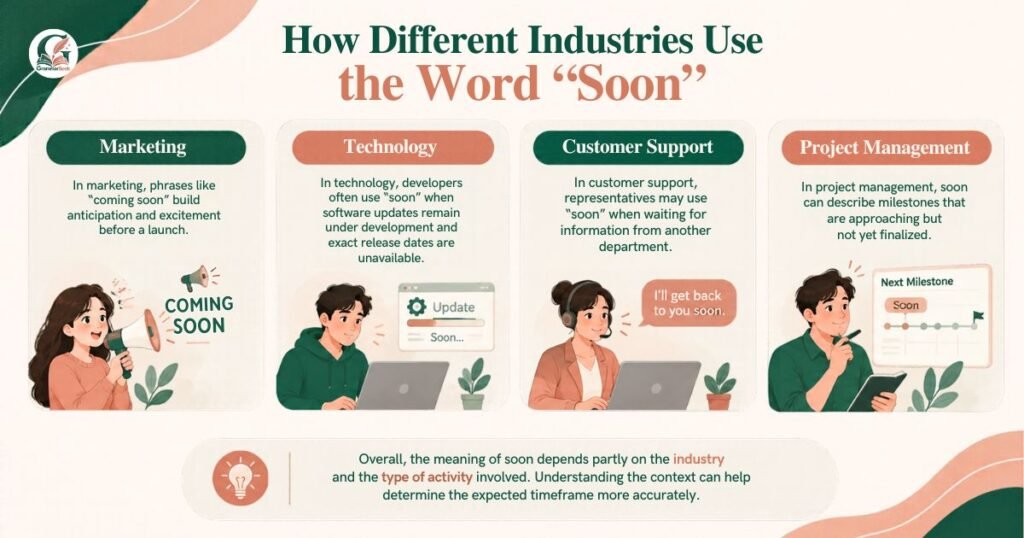
Overall, the meaning of soon depends partly on the industry and the type of activity involved. Understanding the context can help determine the expected timeframe more accurately.
Alternatives to Saying “Soon”
Using specific timeframes instead of the vague term “soon” can significantly enhance communication clarity.
For example,
- Replacing “I’ll call you soon” with “I’ll call you this afternoon” not only sets expectations but also establishes a sense of reliability.
- Similarly, saying “The update will launch next week” eliminates uncertainty and allows others to plan accordingly, fostering trust and accountability.
When timing is less predictable, consider alternatives like:
- “within two days”
- “by the end of the week”
- “later today.”
These phrases provide a clearer picture without overpromising or causing frustration. By choosing precise language, you transform vague expectations into actionable timelines, ultimately leading to more effective interactions.
Explore More English Grammar and Word Usage Tips
Understanding words like “soon” can help you communicate more clearly in everyday English. Want to improve your grammar and avoid common mistakes?
Explore our guide on Which of the Following to understand its correct usage.
Learn the correct spelling of Hustle or Hussle to avoid confusion in your writing.
You can also discover the difference between Cancellation vs Cancelation and when to use each spelling. These simple guides will help you write English more accurately and confidently.
Conclusion
“How long is soon?” There is no exact or universal timeframe. The meaning of soon depends on the context and may refer to a few minutes, several hours, days, weeks, or even months.
Rather than looking for one fixed soon definition, consider the situation and the event being discussed. “Soon” expresses a general expectation rather than a precise deadline, so when exact timing matters, clarifying the expected timeframe can help avoid misunderstandings.
FAQs
Does Soon Mean Today?
Yes, “soon” can mean today, especially in everyday conversation. However, it does not guarantee that something will happen before the day ends.
Can Soon Mean Tomorrow?
Yes. “Soon” can mean tomorrow when the context suggests that the event will happen in the near future. The exact timeframe depends on the situation.
Can Soon Mean Weeks?
Yes, “soon” can refer to weeks, particularly for larger projects, product launches, hiring decisions, or software development. It can even refer to months in some contexts.
Is Soon Longer Than Shortly?
Not necessarily. “Soon” and “shortly” both refer to the near future, but “shortly” can sometimes suggest a more immediate timeframe. Their exact meaning depends on context.
How Long Should I Wait If Someone Says Soon?
There is no fixed waiting time for “soon.” The appropriate timeframe depends on the situation, so if timing is important, ask the person for a specific time or deadline.
Is Soon a Vague Word?
Yes. “Soon” is a vague time expression because it does not specify an exact duration. It can refer to minutes, hours, days, weeks, or longer depending on context.
Can Soon Mean a Few Minutes?
Yes. In situations such as food delivery, transportation, or meetings, “soon” may mean a few minutes.
Can Soon Mean a Few Hours?
Yes. In texts, emails, and routine workplace situations, “soon” may mean within a few hours or later the same day.
Does Soon Have an Exact Timeframe?
No. “Soon” has no universal timeframe. Its meaning changes according to the event, situation, and context in which it is used.
What Is the Meaning of Soon?
“Soon” means in or after a short time from now, but the length of that time is not fixed. The context determines how soon the event is expected to happen.