
Connotation vs Denotation Explained With Clear Examples
Language is a powerful tool, yet many are unaware that the words they choose can shape perceptions in profound ways. The difference between connotation vs denotation is essential for anyone looking to improve their writing and communication skills.
Denotation is simply the dictionary definition of a word, while connotation includes the feelings and associations that come with it.
Recognizing how word choice affects tone and interpretation is especially beneficial for English learners and writers alike. In this guide, we will provide clear examples to illustrate the significance of connotation and denotation, enabling you to make more informed choices in your communication.
Quick Answer
Denotation refers to the literal, dictionary definition of a word, while connotation encompasses the emotional and associative meanings it carries.
For example, “home” denotes a place where one lives, but it connotes warmth, safety, and belonging. Grasping both adds nuance to writing, enhancing tone and clarity.
What is Denotation?
Denotation refers to the literal, direct, and objective meaning of a word, essentially acting as the dictionary meaning.
For example, the term “dog” denotes a domesticated mammal that is often kept as a pet. This basic understanding is universally recognized and does not vary based on personal feelings or interpretations.

It serves as a solid foundation for effective communication, ensuring that everyone shares a common reference point for understanding specific terms.
While denotation serves as the clear-cut meaning, it’s essential to recognize its distinction from connotation, the feelings or associations linked to a word.
What is Connotation?
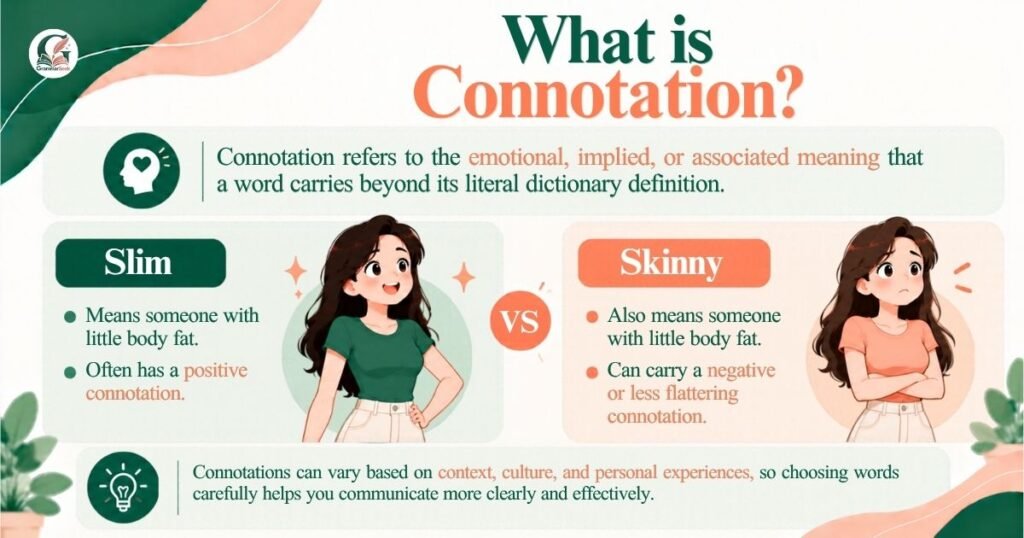
Connotation refers to the emotional, implied, or associated meaning that a word carries beyond its literal dictionary definition.
For example, the words “slim” and “skinny” both describe someone with little body fat, yet they evoke different feelings. Slim often has a positive connotation, while skinny can sometimes carry a more negative or less flattering tone.
This example highlights how connotations can shift depending on the context, culture, and personal experiences of the speaker and listener.
Understanding connotation is crucial for effective communication, especially for English learners. The same word can produce different emotional responses, which can significantly alter the meaning of a message.
Choosing words carefully based on their connotations can enhance the clarity and impact of your communication.
By paying attention to these subtleties, learners can connect more deeply with their audience and convey their thoughts with greater nuance.
Connotation vs. Denotation (Key Differences Table)
Here’s a quick Connotation vs Denotation comparison table to understand the key differences between connotation and denotation:
| Feature | Denotation | Connotation |
| Meaning | Literal, dictionary meaning | Emotional or implied meaning |
| Nature | Objective and direct | Subjective and context-dependent |
| Source | Dictionary definition | Feelings, experiences, and cultural associations |
| Example | “House” = a place to live | “Home” = comfort, safety, and belonging |
Denotation provides clarity and precision, connotation enriches language with emotional depth and cultural significance. Recognizing this duality allows for more nuanced communication, helping speakers and writers convey their intended meaning more effectively.
Examples of Connotation vs Denotation
Understanding the difference between connotation and denotation is crucial for effective communication. Let’s explore some connotation vs denotation examples to illustrate how subtle shifts in word choice can change meaning.
Cheap vs. Affordable
Both words suggest low cost, but “cheap” often carries a negative connotation, implying inferior quality or lack of value, while “affordable” reflects a more positive tone by suggesting value for money without compromising quality.
House vs. Home
A “house” denotes a physical structure, whereas “home” evokes feelings of comfort, safety, and belonging. The connotation of “home” implies emotional warmth and nostalgia, while “house” may feel cold and impersonal.
Childish vs. Childlike
Both words describe qualities associated with children, but “childish” has a predominantly negative connotation, implying immaturity or self-centered behavior, while “childlike” captures a sense of wonder and innocence.

Bold vs. Reckless
The term “bold” suggests courage and confidence, often admired in contexts like leadership, while “reckless” implies a lack of caution and responsibility.
Skinny vs. Slender
While both terms describe a slim physique, “skinny” often carries a connotation of unhealthiness or fragility, whereas “slender” is usually viewed more favorably, suggesting grace and elegance.
These examples of connotation vs denotation show how word choice can change the tone and emotional impact of a message, even when words have similar denotations.
Types of Connotation
There are three primary types of connotation: positive, negative, and neutral. Understanding these distinctions can significantly enhance your writing and speaking, allowing you to convey the desired emotional response in your audience.
Positive Connotation
Positive connotations are words that evoke feelings of approval, admiration, or warmth. They create an uplifting atmosphere and can enhance the emotional impact of communication.
For example, describing someone as “confident” implies self-assurance and strength, making the description sound more favorable in personal and professional contexts.
Labeling an action as “generous” suggests a person’s kindness and willingness to share, while “courageous” indicates bravery and resilience in facing challenges, highlighting admirable qualities that inspire others.
Negative Connotation
Words with negative connotations evoke feelings of disapproval or disdain. These terms can tarnish a person’s reputation or alter the perception of actions.
For example, calling someone “arrogant” suggests not only self-importance but also a lack of humility, potentially alienating them from others.
The term “stingy” implies a tighter grip on resources, painting a picture of selfishness, while “reckless” denotes a disregard for safety and responsibility, often attracting negativity and criticism.
Such words can deeply influence opinions and attitudes in interpersonal relationships.
Two words can describe a similar situation yet feel very different: “vagrant” often sounds judgmental, while “homeless” is more neutral, as explained in vagrant vs hobo.
Neutral Connotation
Neutral connotations are straightforward and factual, lacking any emotional weight or bias. Words like “table,” “chair,” or “car” simply describe objects without invoking any feelings or judgments.
They serve a practical purpose and form the backbone of communication without coloring the message. This clarity allows for precise discussions in fields like science, law, or business, where objectivity is paramount.
Utilizing neutral connotations can facilitate clear understanding, ensuring the focus remains on the facts rather than emotional implications.
Why Connotation and Denotation Matter in Writing
Understanding connotation or denotation is crucial for writers aiming to craft precise and impactful prose. While denotation refers to a word’s literal meaning, connotation encompasses the emotional and cultural associations that accompany it.
For example, the words “slim” and “skinny” both denote a lack of excess weight. The connotation of “slim” is often positive, implying fitness and attractiveness, while “skinny” may sometimes carry a less positive connotation, suggesting extreme thinness or frailty.

A delicate choice of words can shift the entire mood of a piece. Consider the difference between describing someone as “affectionate” versus “clingy.” Affectionate evokes warmth and love, while clingy carries a negative implication of dependency.
Such nuances not only enhance clarity but also help shape readers’ emotional responses, making them feel more connected or distanced from the subject matter. By recognizing the power of connotation and denotation, writers can elevate their communication, ensuring that their intentions resonate effectively.
How to Identify Connotation vs Denotation (Step-by-Step)
Here is a step by step guide to identify denotation vs connotation.
- Identify the Denotation: Start by looking up the word in a dictionary to understand its literal meaning. For example, the denotation of “cheap” is having a low price. This straightforward definition provides the foundation for further analysis.
- Explore Connotation: Next, reflect on the feelings and associations the word evokes. While “cheap” denotes a low cost, it often carries a negative connotation, suggesting poor quality or inferiority. This emotional layer can significantly influence how the word is perceived in conversation.
- Examine Context: Finally, consider the context in which the word is used. The surrounding words and the overall tone can shift the meaning. For example, if someone says, “I love the cheap shoes I found,” the context gives “cheap” a more favorable overall impression by emphasizing the value of the shoes. By paying attention to context, you can uncover the nuances that define a word’s full impact.
Common Mistakes Students Make
One common mistake students make is confusing literal and implied meaning. For example, when a text describes a character as “childish,” it carries a negative connotation implying immaturity, while ‘youthful’ often has a positive connotation, suggesting energy and vitality.
To address this, students should practice identifying words within their specific context, asking themselves how the words affect the tone and overall message of the piece.
Another frequent error is assuming that similar denotations carry the same tone. For example, “slim” often carries a positive connotation, while skinny can sometimes have a less favorable tone. “Skinny” can imply an unhealthy or undesirable state.
To improve understanding, students should create a list of synonyms and explore their nuanced differences, considering how each term might be received by different audiences.
Ignoring context is also a prevalent issue. Words may take on different meanings depending on the surrounding text or cultural background. The word “home,” for instance, can evoke feelings of warmth or safety but might also signify confinement to someone who has had negative experiences.
Students should engage with the text deeply, examining surrounding sentences and overall themes to build a fuller understanding.
Students often assume that connotations are universal across cultures and languages. For example, while “persistence” is viewed positively in some contexts, it might be seen as stubbornness in others.
To tackle this mistake, students should consult reliable sources or discuss with peers from diverse backgrounds to gain insights into how connotations can vary, enriching their comprehension and appreciation for different perspectives.
Memory Trick to Remember the Difference
A simple memory trick can help you remember the difference between denotation vs connotation.
Use the mnemonic Denotation = Dictionary, since both words start with ‘D,’ it links denotation to its definition as the literal meaning found in a dictionary.
For example, the denotation of ‘home’ is the place where someone lives.

Think of Connotation = Connection, as connotation relates to the emotional associations we attach to words.
With “home,” the connotative meaning evokes feelings of comfort, warmth, and belonging. This simple trick helps clarify the difference between connotation and denotation effectively.
Real-Life Uses of Connotation and Denotation
Words carry layers of meaning that can significantly affect our daily communication.
In advertising, the choice between “affordable” and “cheap” shows how connotation can influence perception. “Affordable” often suggests good value, while “cheap” can sometimes imply low quality.
In social media and workplace communication, word choice can also shape how people and ideas are perceived. For example, describing someone as “confident” usually sounds positive, while “arrogant” suggests excessive self-importance. Similarly, calling a coworker “assertive” may suggest confidence and professionalism, whereas “aggressive” can imply hostility.
Recognizing these differences helps people choose appropriate words, avoid misunderstandings, and communicate with the intended tone and emotion.
Two everyday words with similar meanings but different tones are explained in trash vs garbage.
Explore More English Topics
Keep improving your understanding of English with these helpful guides.
Learn the difference between a simile vs metaphor and explore antithesis vs juxtaposition to understand more literary devices.
You can also discover how long is soon and learn the difference between thank you both vs thanks to both of you.
Check the correct spelling of message vs messege to avoid common spelling mistakes.
Conclusion
The key difference between connotation and denotation is how a word communicates meaning. Denotation refers to the straightforward, dictionary definition of a word, while connotation involves the feelings and associations that come with it.
Words with similar denotations can evoke different emotions based on context. Understanding both connotation and denotation enhances your word choice, improves tone, and clarifies your message.
FAQs
What Is Connotation In Simple Words?
Connotation refers to the feelings, emotions, or associations that a word carries beyond its literal definition. For example, the word “home” typically evokes a sense of warmth, comfort, and safety, suggesting more than just a physical structure.
What Is Denotation?
Denotation refers to the explicit, direct meaning of a word or phrase, the definition you would typically find in a dictionary. It encompasses the primary meaning without any emotional or associative implications. For example, the denotation of the word “rose” is a type of flowering plant belonging to the genus Rosa.
What Is The Main Difference Between Connotation And Denotation?
Denotation refers to the literal or primary meaning of a word, the specific definition you would find in a dictionary. Connotation encompasses the emotional and associative meanings attached to a word, which can vary significantly from person to person.
While denotation offers clarity, connotation adds depth and richness to language, allowing for more nuanced communication.
Can A Word Have Both Connotation And Denotation?
Yes, every word indeed possesses both a denotation and a connotation, reflecting its literal and emotional meanings.
Why Is Connotation Important In Writing?
Connotation plays a crucial role in writing because it influences how language is perceived by the reader. Words carry not only their literal meanings but also associations and emotional overtones.